A quiet house after a successful eradication is a deceptive relief. The absence of scratching in the walls or droppings in the pantry does not mean the battle is over; it simply marks the beginning of the most critical phase: exclusion.
Without rigorous, systematic mouse-proofing, the structural vulnerabilities that allowed the initial breach remain wide open. Professional exclusion stops this cycle directly at the structural level.
Why Are Homes Vulnerable to Repeat Infestations?
Understanding rodent behaviour is important to implementing effective barriers. Mice are biologically driven to seek warmth, shelter, and food, especially during harsh Canadian winters when outdoor survival becomes impossible.
When an initial population moves into a residence, they leave behind powerful biological markers. These pheromone trails soak into insulation, wood, and drywall, acting as a permanent beacon to passing wildlife long after the original occupants are gone.
Continuous Structural Shifting
The structural integrity of residential buildings constantly shifts. Freeze-thaw cycles common in northern climates cause foundations to crack, mortar to crumble, and weatherstripping to degrade over successive seasons.
- Micro-Breaches: A gap the size of a dime is all a mouse needs to squeeze through.
- Skeletal Compression: Since their skeletons are highly flexible, they compress their bodies to exploit minor architectural flaws with absolute ease.
The Danger of Reactive Trapping
Professional exclusion does not just address current holes; it anticipates future structural shifts and fortifies the property against relentless biological pressure. By ignoring the underlying structural issues, property owners trap themselves in a reactive loop of trapping and baiting.
True resolution requires a proactive shift, focusing entirely on turning the structure into an impenetrable fortress against wildlife by completely neutralizing every conceivable vulnerable entry point across the entire residential envelope.
How Is the Exterior Perimeter Secured?

The foundation and exterior envelope serve as the primary line of defence. Professionals approach exterior sealing systematically, examining every square inch of the home’s footprint completely.
- Foundation Assessment and Sealing: Experts scrutinize the foundation for hairline cracks, deteriorating parging, and gaps around utility penetrations. Standard caulking is entirely insufficient against rodent teeth. Instead, professionals apply specialized elastomeric sealants mixed with copper mesh, destroying a rodent’s gums if they chew through the barrier.
- Weep Hole Protection: Brick homes feature weep holes designed to allow moisture vapour to escape. These essential ventilation points are notoriously common entry points. Technicians install rigid, custom-fitted stainless steel weep hole inserts, permitting necessary airflow while actively blocking pest access.
- Door and Window Fortification: Worn weatherstripping and compromised door sweeps provide effortless access. Experts install heavy-duty, gnaw-proof door sweeps embedded with dense brush. Garage doors receive particular attention, requiring immediate replacement with robust, completely rodent-proof threshold barricades.
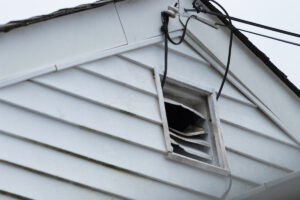
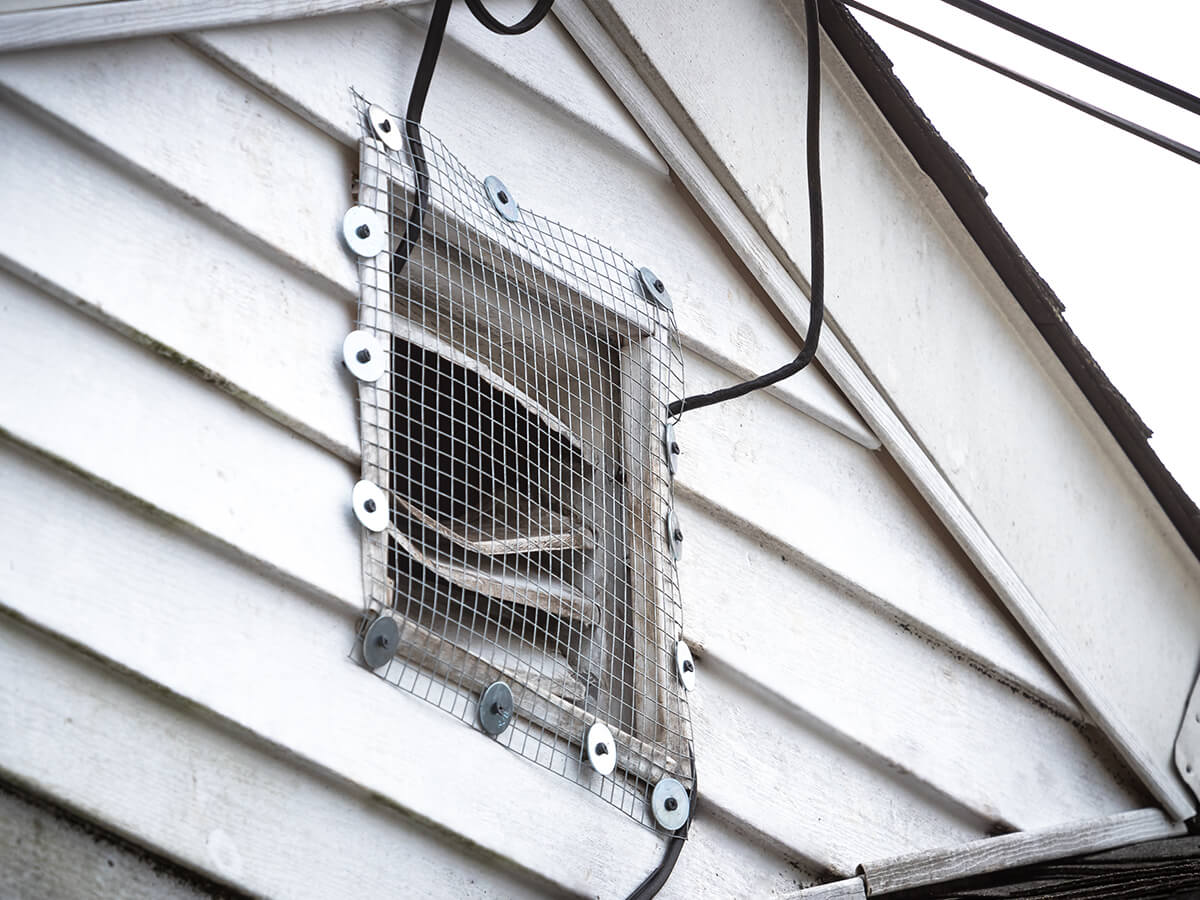
- Roofline and Eavestrough Defences: Mice are excellent climbers, easily scaling brickwork. Technicians inspect the roofline, soffits, and roof vents. Experts upgrade standard covers to heavy-gauge galvanized steel mesh covers, bolted directly into the roof deck.
- Utility Line Fortification: The entry points for air conditioning conduits, gas lines, and electrical boxes often feature oversized holes drilled during construction. Technicians pack these voids tightly with chew-resistant materials and cap them with durable exterior sealants, leaving no margin for error.
What Interior Exclusion Tactics Ensure Long-Term Defence?
Even with a perfectly sealed exterior, interior fortification acts as a crucial secondary barrier, confining any potential future anomalies to highly restricted areas and preventing them from reaching sensitive living spaces or food sources.
-
Kitchen Architecture Fortification
The kitchen is a primary target. Stoves and refrigerators often hide massive wall penetrations. Technicians completely seal these hidden utility gaps using sheet metal collars.
-
Cabinetry and Baseboard Enforcement
The voids beneath lower kitchen cabinets are common highways. Professionals inspect kick plates and seal gaps where cabinetry meets the floor. Gaps along baseboards caused by settling floors are caulked seamlessly, eliminating hidden transit routes.
-
Plumbing Chase Isolation
Water lines running under sinks or near washing machines create pathways between floors. The gaps around these pipes are meticulously packed with stainless steel wool and covered with escutcheon plates, physically blocking internal vertical movement through the home.
-
Attic and Basement Vulnerabilities
Unfinished basements and attics offer endless nesting material. The basement sill plate is a notorious structural weak point. Technicians apply sealants along this entire perimeter, and completely seal attic drop ceilings and exhaust housings.
-
Floor Drain and Sump Pump Reinforcement
Sump pump pits are damp spaces that rodents frequently exploit. Technicians install heavy-duty steel covers over open pits and secure rigid metal grates over all exposed floor drains, blocking intrusion.
How Does Habitat Modification Prevent Returns?
Physical barriers alone represent only half of a comprehensive exclusion strategy. Environmental management is equally critical to reducing the immense pressure on the home’s perimeter. If a property remains highly attractive to wildlife, rodents will relentlessly test the structural defences until they eventually find a microscopic flaw.
An integrated approach combining prevention and control measures can effectively manage and control rodents in various habitats, reducing economic damage and pesticide use (Jurišić et al., 2022).
By altering the immediate landscape, experts drastically lower the carrying capacity of the property.
Strategic Vegetation Management
Thick vegetation planted flush against a foundation provides perfect cover from predators while mice chew at the mortar. Experts mandate a strict eighteen-inch clearance zone around the foundation. Shrubs must be trimmed, and low-hanging tree branches that provide a bridge to the roofline must be aggressively pruned back.
Debris and Storage Relocation
Firewood stacks, construction materials, and lawn waste piles are essentially luxury condominiums for outdoor mice.
- Elevation Strategies: These materials should be elevated on robust metal racks at least 45 centimetres off the soft ground.
- Distance Mandates: Items must be moved as far away from the residential structure as the property line permits to actively discourage nesting near the home’s delicate foundation.
Food Source Elimination
- Bird Feeder Management: Dropped seeds attract massive populations. Experts strongly advise removing bird feeders entirely or switching to purely liquid nectar feeders.
- Waste Containment: Garbage and compost bins must be upgraded to wildlife-proof models featuring locking lids.
- Pet Food Strictness: Pet food must never be left outside unattended at any time, as it serves as a highly concentrated, easily accessible caloric reward that will quickly draw neighbouring rodent colonies directly to the immediate perimeter of your property.
What Role Do Advanced Diagnostics Play in Exclusion?
Walking around a property with a flashlight is no longer sufficient. True structural reinforcement requires modern diagnostic tools to ensure microscopic entry points are accurately detected.
-
Thermal Imaging Technology
Experts use infrared cameras to detect tiny temperature fluctuations along walls and foundations. Hidden drafts often highlight structural voids rodents use as highways. These invisible superhighways are comprehensively mapped and systematically dismantled.
-
Ultraviolet Tracking
Since mice continuously urinate as they travel, their pathways are painted with biological markers. Technicians use commercial-grade ultraviolet lighting to illuminate these hidden trails. By tracing the exact routes from feeding zones back to nesting areas, professionals can pinpoint the exact origin of the breach, even if hidden under dense insulation.
-
Smoke Testing and Airflow Analysis
Experts employ non-toxic smoke testing to identify complex structural breaches. By lightly pressurizing a basement with visible smoke, technicians observe exactly where air escapes through the exterior cladding, revealing pest entry points.
-
Acoustic Sensor Deployments
To guarantee complete structural isolation, professionals rely on acoustic monitoring devices. These sensors are temporarily installed within wall voids to detect microscopic scratching sounds that human ears simply cannot perceive, ensuring the property is vacant.
Why is Professional Auditing and Maintenance Crucial?
Once the physical barriers are installed and the environmental attractants are eliminated, the home must be continually monitored. Professional exclusion requires ongoing vigilance to ensure structural integrity remains uncompromised against harsh seasonal weather and shifting foundations.
The Preventative Auditing Cycle
Regular structural audits represent the final phase of a complete proofing strategy. During these routine assessments, technicians examine previous exclusion work to ensure sealants have not degraded and metal meshes remain firmly anchored.
- Perimeter Checks: Technicians routinely monitor the exterior for new burrowing activity or fresh rub marks along the siding.
- Vulnerability Detection: A homeowner lacking specialized training will easily overlook a newly formed hairline foundation fracture or damaged soffit. High-quality pest control in Toronto relies heavily on this preventative auditing cycle. Identifying vulnerabilities early prevents massive interior breaches and saves substantial resources.
Advanced Exterior Monitoring Stations
Professionals deploy specialized monitoring stations along the exterior perimeter. These discreet, tamper-proof boxes contain non-toxic tracking blocks rather than traditional rodenticide.
- Population Density Gauging: By inspecting these blocks for fresh gnaw marks, experts can accurately gauge the surrounding pest population density.
- Pressure Assessment: This carefully determines if the home is under increased biological pressure due to seasonal shifts or neighbouring construction projects. This data-driven approach guarantees the home remains highly secure against intrusion.
Lock Down Your Property Now
Stop relying on temporary fixes and immediately transition to permanent structural defence. Protect your property, safeguard your family’s health, and permanently close the door on future infestations.
Call us at Pro Pest Corporation today by dialing (416) 487-4179 to secure the most relentless, technologically advanced mouse and mice removal in Toronto. Demand absolute structural integrity, demand complete peace of mind, and refuse to share your residence with invasive wildlife for another single night.